
Gallbladder and Hernia Surgery: What to Expect Before and After Treatment
Many people experience abdominal discomfort at some point in life, but the reasons behind it vary widely. Some problems settle on their own, while others keep coming back, affecting eating habits, sleep, movement, and overall energy levels. Two such conditions that often trouble individuals are gallbladder disease and hernias. While both are common, the way they behave inside the body is disparate. What they share, however, is that many people are unsure about when surgery becomes necessary and what life looks like after treatment.
This guide offers a clear, patient-friendly overview of how gallbladder and hernia problems develop, how doctors decide the right time for surgery and what recovery feels like afterward. Instead of focusing only on the procedure itself, this blog explains the overall experience so patients feel informed and prepared.

"When pain keeps returning, treatment isn’t just about fixing the problem — it’s about getting life back on track."
Why Gallbladder Problems Become Troublesome
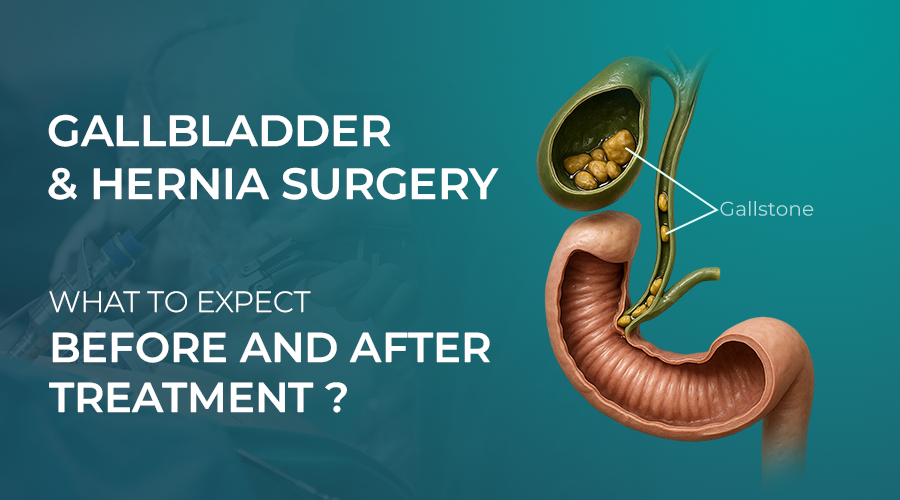
The gallbladder often goes unnoticed until it begins causing discomfort. It stores bile, which helps digest fats. When stones form inside it, the organ may become irritated or blocked, leading to symptoms such as
- Pain on the right side of the upper abdomen
- Nausea or a heavy feeling after meals
- Sudden pain attacks that come and go
- Back or shoulder discomfort
- Bloating or indigestion
Gallbladder pain often starts after oily or spicy meals. Some people try to manage it with diet changes, but when the attacks become more frequent, daily life is affected. At that point, doctors usually discuss surgery as a long-term solution.
How Hernias Develop Slowly but Grow Over Time
A hernia is slightly different because it usually begins as a small bulge. Many people ignore it at first, especially if the discomfort is mild. But hernias rarely stay the same size. Over time, coughing, lifting, strain or even daily walking may increase the bulge. Symptoms may include:
- A visible or felt lump in the groin or around the navel
- A pulling sensation
- Pain after physical activity
- Discomfort while bending or lifting
Even when the pain is mild, doctors recommend repair because untreated hernias can lead to complications later. Repairing the weakened muscle area restores strength and prevents the bulge from returning.
How Doctors Decide Whether Surgery Is Needed
Not every case requires immediate surgery. The decision is based on a combination of symptoms, test results and how the condition affects daily activity.
- For gallbladder problems: Doctors look at the frequency of pain attacks, the presence of infection, size of stones and whether digestion is being disturbed. Repeated attacks are a strong sign that the gallbladder may need to be removed to avoid further inflammation.
- For hernias: The size of the bulge, level of discomfort and risk of trapping internal tissue determine the need for repair. If symptoms worsen or the hernia begins affecting movement, surgery becomes the best option.
This evaluation stage is important because it allows patients to discuss their concerns openly and understand their options clearly.
The Day Before Surgery: How Patients Usually Prepare
Preparation is often simpler than people expect. Patients may be advised to:
- Avoid heavy meals at night
- Stay hydrated
- Pause certain medications if needed
- Arrive early on the day of surgery
These steps help the body stay comfortable and ready for the procedure. Some people feel nervous before surgery, which is natural. Talking freely with the doctor usually helps ease those worries.
What Recovery Actually Feels Like
People often imagine recovery to be difficult, but the experience today is disparate because of minimally invasive methods.
- After gallbladder surgery: Many patients feel relief from the constant digestive discomfort they had been experiencing. The soreness around the incision sites reduces quickly over a few days. Most individuals gradually return to normal eating habits, although they may prefer lighter meals initially.
- After hernia repair: The first few days involve mild stiffness, especially while standing up or turning. Walking helps improve comfort and keeps the body active. A gentle routine is encouraged, with heavier lifting avoided for a few weeks.
Each person’s recovery speed is different, but most patients resume regular daily activities sooner than they expect.
Mental and Emotional Comfort Matters Too
Some patients find the idea of surgery more challenging than the physical process itself. Knowing what will happen, how long recovery usually takes and how soon they can return to work helps ease the anxiety. Modern surgical approaches are designed to help individuals regain confidence quickly with minimal disruption to daily life.
When to Contact the Doctor After Surgery
Doctors encourage patients to reach out without hesitation if they notice:
- Continuous Vomiting
- Fever
- Increased redness or swelling around the incision
- Pain that suddenly worsens
Early communication is always helpful and reassures patients during recovery.
Connecting with Dr. Varun
If you have been dealing with symptoms related to gallbladder irritation or a hernia bulge and feel unsure about the next step, speaking with a specialist can bring clarity. You can read more about Dr. Varun’s experience, qualifications and medical approach on his About Page.
For questions, clarifications, or appointments, Contact now or who prefer direct visit can use Google Maps to locate the clinic easily.
Learn More About Digestive Conditions
For those who like simple, jargon-free medical explanations, MedlinePlus provides a well-organized resource covering various digestive illnesses and treatments.
You can check it out here:
Final Note
Gallbladder and hernia problems are common, but each person’s experience is unique.
When symptoms begin interfering with daily comfort, getting the right guidance helps prevent future complications and leads to a smoother recovery journey. Understanding the process before and after surgery gives patients the confidence to make decisions that support long-term health.
